
What Gets You Excited?
About Photographing something...

What is it that stops you in your tracks, that makes you take notice; or makes your heart dance with excitement, or makes you suck in your breath at the wonder of it?
In my workshops, I am always talking about clarifying your vision. Ansel Adams, who turned 124 today (yes, posthumously) said “There is nothing worse than a sharp picture of a fuzzy concept.” If you aren’t sure what you are trying to express, or say, with the photograph you are making, how do you expect anyone else to ‘get it’?
That is different, of course, for abstract photographers, or impressionistic photographers. But for the rest of us, doing literal, realistic images, it’s paramount to have a sense of what got you turned on in the first place to make you stop to photograph, of what your connection is to the scene/subject.
Is it Texture? Pattern? The motion? The contrast of color, or color harmony? Is it the story being told? It can be any of those things, but you’ll want to recognize what it is so you can make the most of that when you make the photograph.
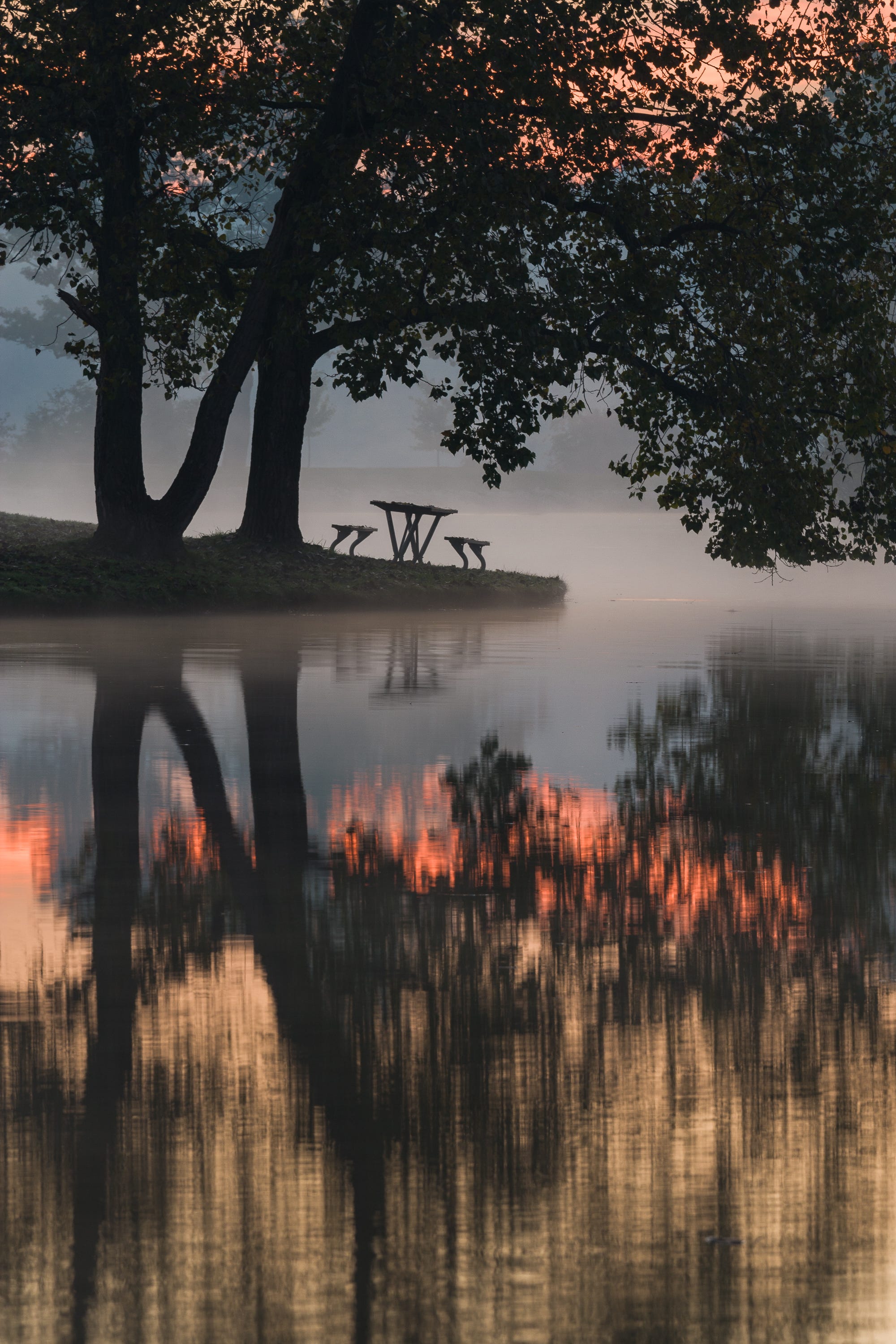
When teaching a workshop several years ago in Ohio, we went out for sunrise/morning light. There wasn’t a stitch of a cloud, and very little fog, which was a disappointment. Yet we did find this one pond, and worked with what we had. I loved the mauve hues and the overall scene was pretty. But what really got me excited was the picnic table under the tree on the right. After I made this photograph, I put on a longer focal length, and made the second image. They are both fine photographs, but the tighter framing brought out the story, and my vision, better. Why? Because when I viewed the big scene, I was feeling the peacefulness of the morning, how lovely it would be to sit on the table and take it all in and I wanted the viewer to feel that, too. The tighter framing communicated that more strongly.
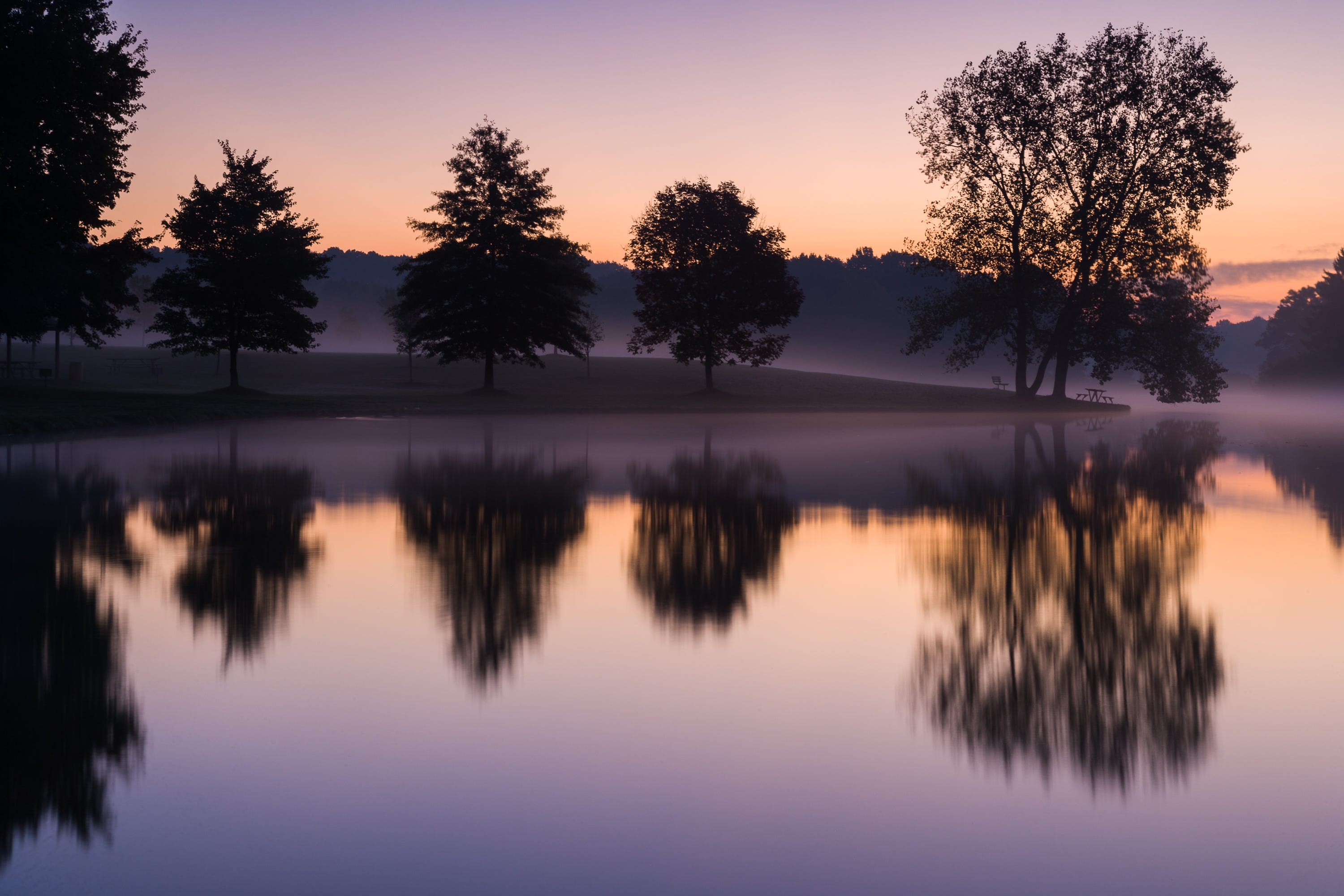
Clarifying my vision, for me, means that I’m out there talking to myself - sometimes out loud, but mostly internally. I am taking inventory of what has my interest, and once I identify that, then the lens choice, shutter speed, aperture, and composition all are based on expressing that vision.
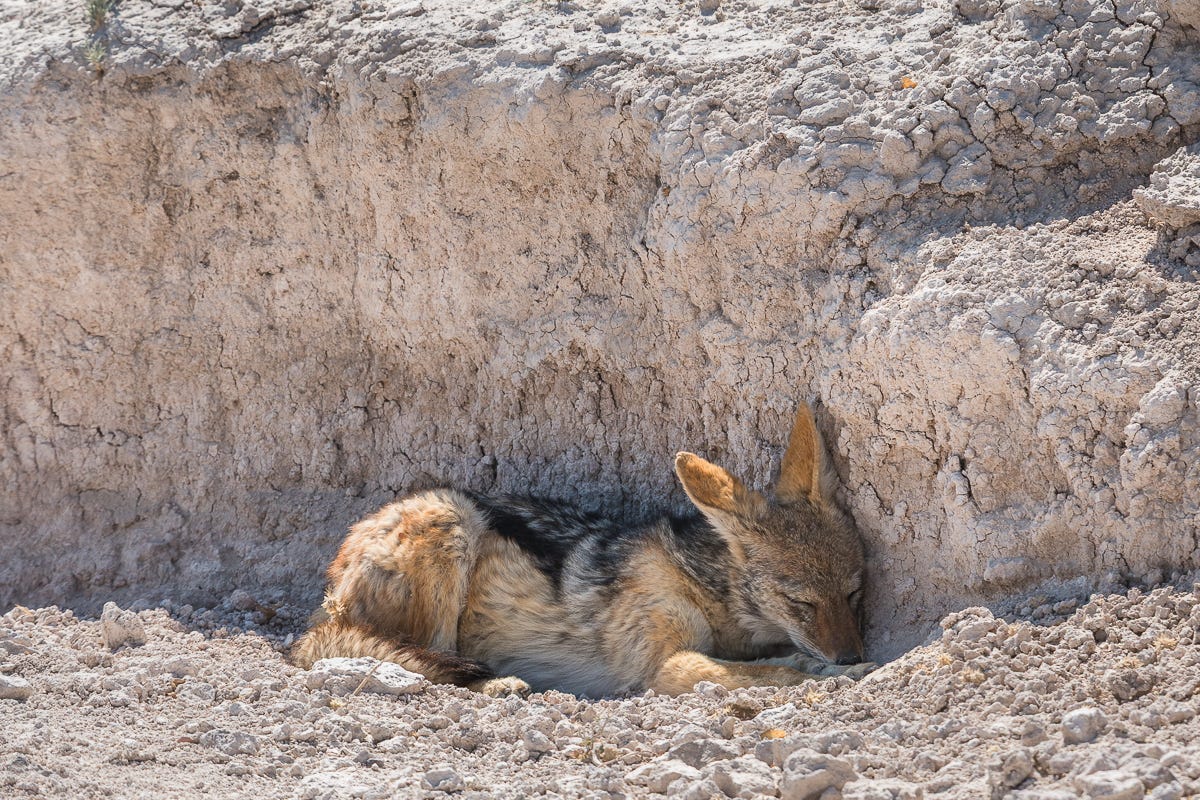
This black-backed jackal in Namibia was desperately wanting shade in which to take a nap. When we discovered it, it was scorching up tightly against the wall of this dry wash to try and put itself in the shade as much as possible. When it settled and closed its eyes, I felt what it felt, ‘finally, a cooler place to nap’. I hope that got expressed in this final image.
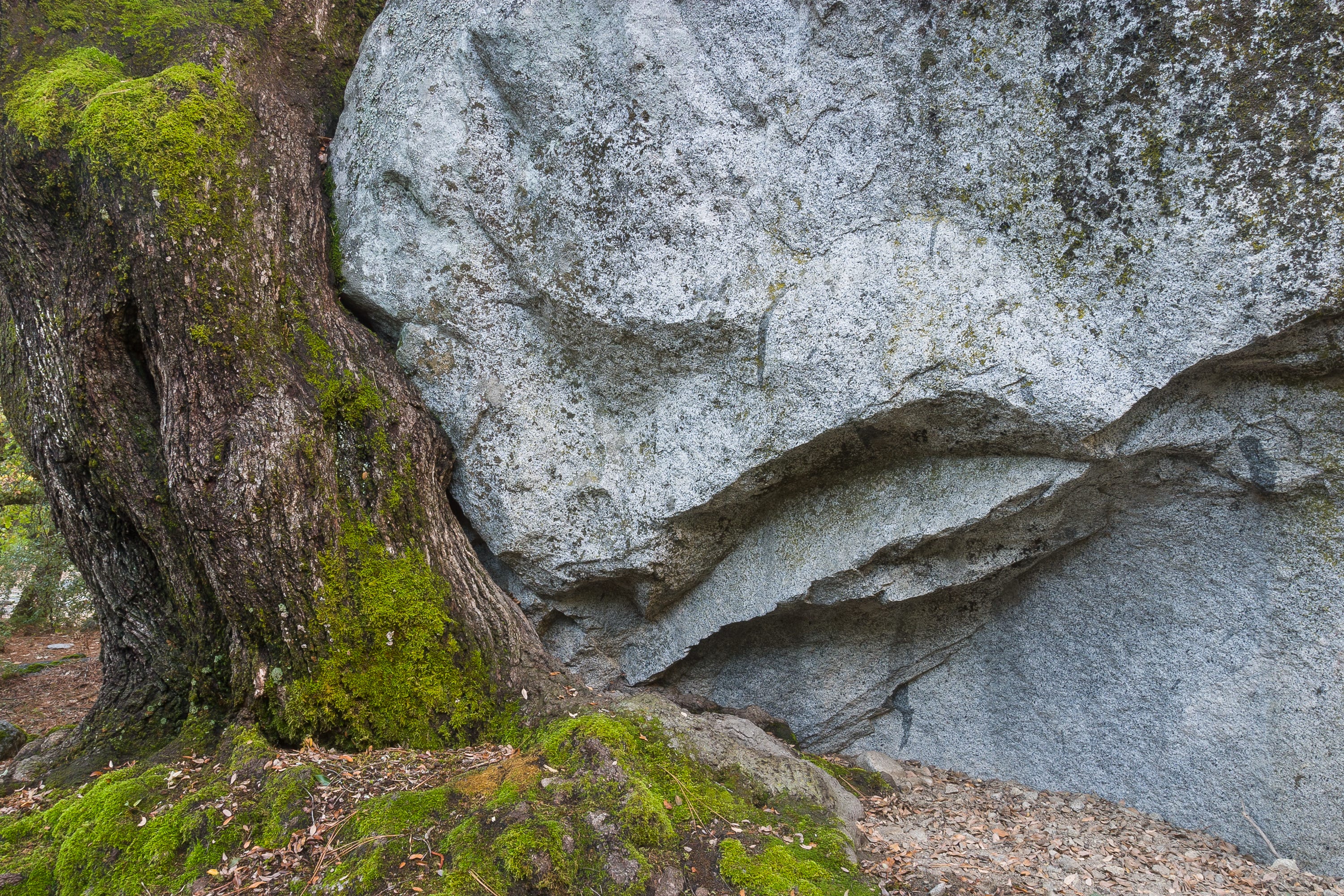
In the image below, one asks the question: Which happened first? Did the tree grow and then the rock fell and pressed against it? Or did the tree grow around the rock. Of course the latter is the answer, but at first, you pause to wonder because the tension is felt when you look at the photo. It feels like the rock is really pushing against that oak, and that is what grabbed my attention. I only had to choose the proportion of the rock vs. tree to create a sense of power in the rock to express my vision of this scene.
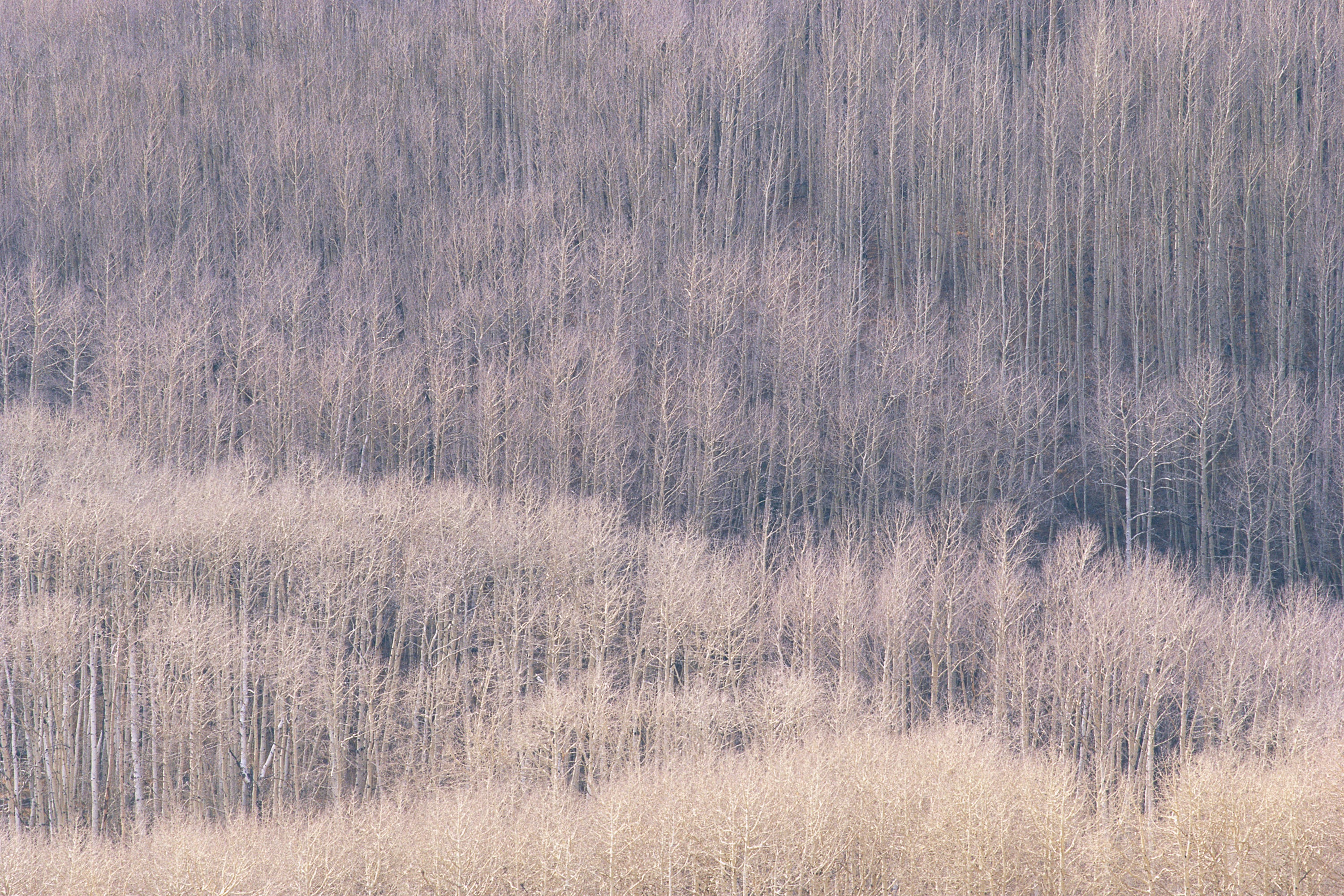
The photograph below made me screech to a halt while driving over this mountain in Utah. You come over the hill and there is this view in late autumn when all the leaves are gone. There is a pullout there but you can easily miss it when your eyes are wide from this view. Well, that’s how I felt about it anyway. My vision was to share how beautiful trees can be even when naked, how you see the bones of the forest when bare. I knew I needed to use a telephoto lens to frame just a section of the huge grove on the hillside, to simplify the scene yet still capture the mass of it. In the soft light of a November afternoon, they took on a silvery hue.
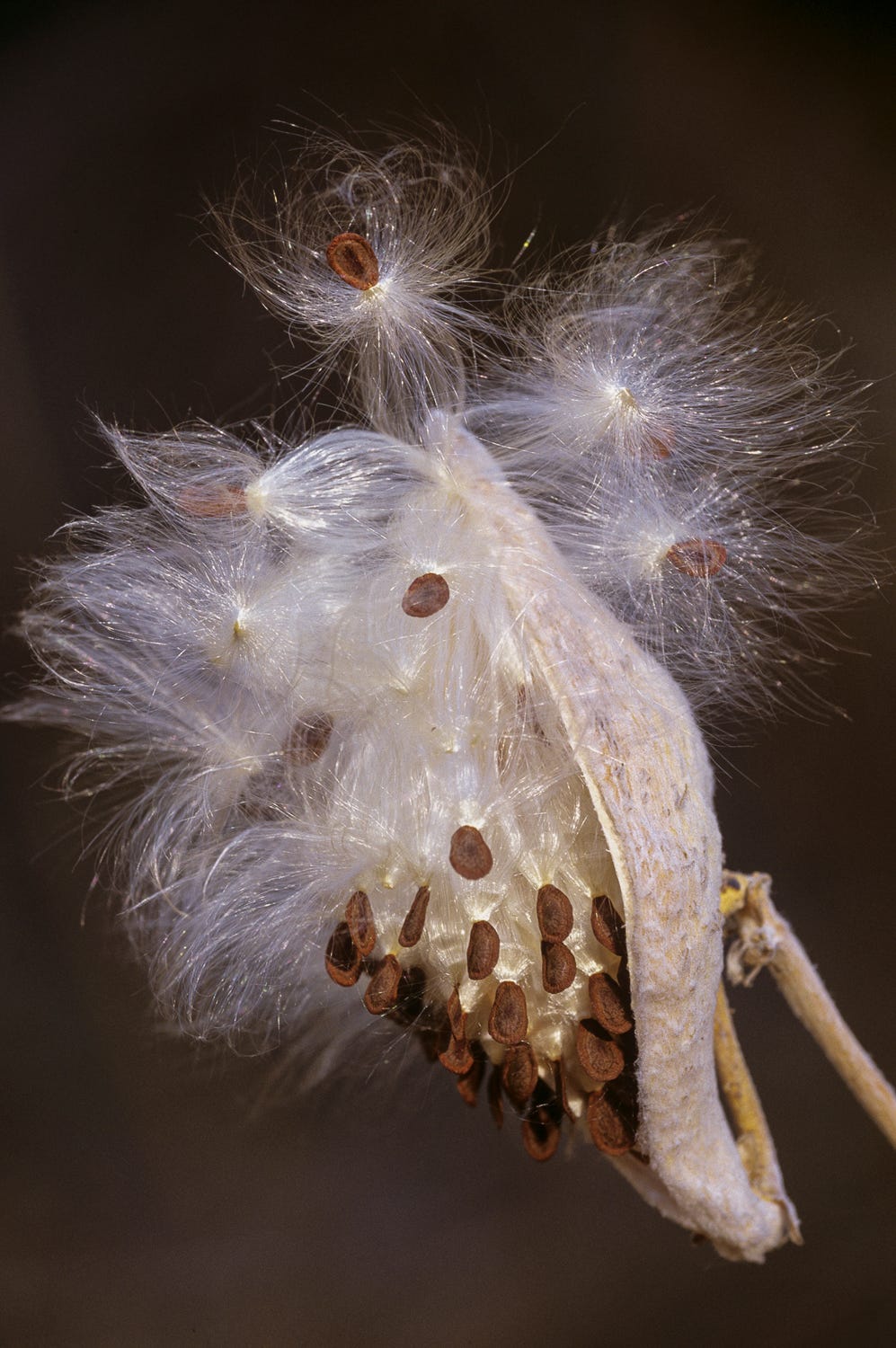
For this final photo, I was drawn to the silky delicate seeds of this milkweed pod. I had diffused light, which brought out the details better than full sunlight; I chose my macro lens to get in close, to show that the pod had only recently burst, and that the seeds were emerging to be caught on the wind. I felt it told the story of the end and the continuation of life for milkweed.
Sometimes, we don’t know what we want to ‘say’ with a photograph; we just know that something made us stop to notice. Try to ask yourself the question(s) of ‘what excites me here?’ Nine times out of ten, you get an answer, and then you can go to work to express that in your photograph.
Have a great week - take time to notice things around you, and thanks so much for being here!
We’ll be leading a workshop in mid-May on the Oregon coast, and would love to have you join us. We’ll also be leading a workshop in Exploring Your Creative Spirit in early June, on lovely Whidbey Island, WA. Please check our workshop schedule for more info.
Wow, Brenda. Adore the (2nd) shot of the picnic table. A case of knowing when to use that telephoto lens, and being grateful for possessing it in that moment. This image is a gem. What a mood it captures!
Great post, these all strike me as interesting. I think that tighter shot absolutely wins me over in that first set of two; the dynamics and lighting, layering and reflections, and a reference with the table that helps with the narrative. Great stuff!